
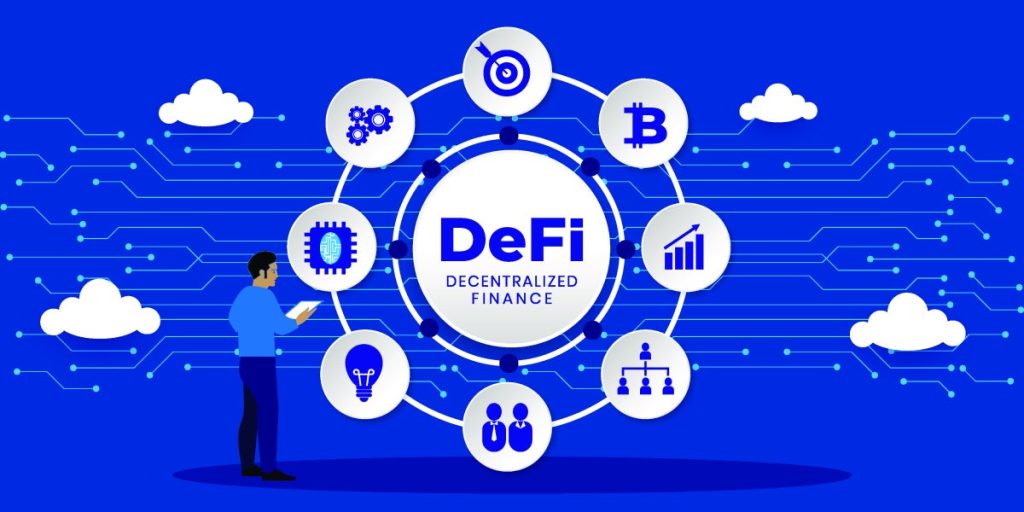
Decentralized Finance, commonly known as DeFi, is transforming the way people interact with money in the cryptocurrency ecosystem. Unlike traditional financial systems that rely on banks, intermediaries, and centralized authorities, DeFi operates on blockchain networks that enable peer-to-peer financial transactions. For crypto investments, DeFi opens up new opportunities for earning, lending, staking, and participating in innovative financial applications.
DeFi uses smart contracts to automate financial processes, making them transparent, secure, and accessible globally. Platforms like Ethereum, Aave, and Uniswap have pioneered the DeFi space, allowing users to engage in activities such as lending, borrowing, trading, and yield farming without intermediaries.
Understanding DeFi is essential for crypto investments to explore new ways to maximize returns while participating in the decentralized finance ecosystem.
Table of Contents
How DeFi Works
DeFi relies on blockchain technology and smart contracts to replace traditional financial intermediaries. Smart contracts are self-executing programs that enforce the terms of a transaction automatically when predefined conditions are met.
For example, a user can lend cryptocurrency on a DeFi platform, and the smart contract ensures repayment with interest without the need for a bank or loan officer. This automation reduces costs, speeds up transactions, and enhances transparency.
Most DeFi platforms are built on Ethereum, but other blockchains like Binance Smart Chain (BSC), Solana, and Avalanche also support DeFi applications. Users interact with DeFi protocols through crypto wallets such as MetaMask or Ledger, which provide secure access to their funds.
Key Components of DeFi
- Decentralized Exchanges (DEXs): These allow users to trade cryptocurrencies without centralized intermediaries. Examples include Uniswap and SushiSwap. DEXs rely on automated market makers (AMMs) to provide liquidity and facilitate trades.
- Lending and Borrowing Platforms: DeFi enables users to lend their crypto and earn interest or borrow assets by providing collateral. Popular platforms include Aave and Compound.
- Stablecoins: Many DeFi applications use stablecoins like USDT, USDC, or DAI to reduce volatility and facilitate trading, lending, and payments.
- Yield Farming and Staking: Users can provide liquidity or stake their assets in DeFi protocols to earn rewards. Yield farming often involves moving assets between protocols to maximize returns, while staking secures the network and generates interest.
- Insurance Protocols: DeFi also offers decentralized insurance solutions to protect users against smart contract failures or hacks, providing an added layer of security for investors.
Benefits of DeFi for Investors
- Accessibility: Anyone with an internet connection and a crypto wallet can participate in DeFi, regardless of location.
- Higher Yields: DeFi often offers better interest rates compared to traditional banks for lending and staking.
- Transparency: All transactions are recorded on the blockchain and are publicly auditable.
- Control: Users retain ownership of their funds, reducing reliance on centralized institutions.
- Innovation: DeFi introduces creative financial products, enabling advanced strategies for trading, lending, and investing.
Risks and Considerations while doing Crypto Investment
While DeFi offers exciting opportunities, it also comes with risks that investors must understand:
- Smart Contract Vulnerabilities: Bugs or exploits in code can result in loss of funds. Using well-audited protocols reduces risk.
- Market Volatility: Crypto assets remain highly volatile, and returns are not guaranteed.
- Regulatory Uncertainty: Governments are still defining rules for DeFi, which could affect accessibility or legality in certain regions.
- Liquidity Risks: Some DeFi protocols may have low liquidity, making it difficult to withdraw funds quickly.
Investors should thoroughly research DeFi platforms, understand the risks, and avoid investing more than they can afford to lose. Resources like Crypto.com Learn and Investopedia DeFi Guide provide valuable guidance for beginners.
How to Get Started with DeFi
To start participating in DeFi:
- Set up a secure wallet: Use wallets like MetaMask or Ledger for safety.
- Choose reliable DeFi platforms: Start with reputable platforms such as Uniswap or Aave.
- Start small: Test protocols with small amounts to understand how transactions work.
- Learn about staking, lending, and liquidity pools: Explore opportunities to earn rewards without taking excessive risk.
- Stay informed: Follow news, protocol updates, and market trends to make educated crypto investment decisions.
Conclusion
DeFi represents a major innovation in the financial world, giving cryptocurrency investors access to decentralized lending, trading, staking, and other financial services. It empowers users by providing transparency, security, and control, while offering opportunities for higher returns than traditional financial systems.
However, DeFi also carries risks, including smart contract vulnerabilities, market volatility, and regulatory uncertainty. Beginners should approach DeFi with caution, conduct thorough research, and employ sound risk management practices.
By combining knowledge, strategy, and security practices, investors can take advantage of the growing DeFi space confidently and responsibly.
Also Check Top 5 Common Mistakes Beginner Crypto Investors Make 2026

1 thought on “DeFi and Its Role in Crypto Investment – Powerful Guide 2026”